In the world of cooking and baking, precision is paramount. While measuring cups and spoons have their place, relying on estimation can lead to inconsistent results and culinary disappointments. For home cooks aspiring to master their craft, from delicate pastries to perfect pour-over coffee, a precise kitchen scale is an indispensable tool. It transforms guesswork into exactitude, ensuring every ingredient contributes perfectly to your dish.
This comprehensive guide will delve into why accuracy matters, explore the types of scales available, highlight crucial features to consider, and recommend the top models that stand out for their exceptional precision, helping you choose the best kitchen scale to elevate your culinary endeavors.
Why Precision Matters: The Undeniable Edge of a Kitchen Scale
The difference between a good dish and a truly great one often lies in the details—specifically, the exact measurement of ingredients. This is especially true in baking, where slight variations in flour or leavening agents can drastically alter the final texture and taste. Similarly, when brewing coffee, precise ratios of beans to water are critical for extracting the perfect flavor.
Measuring by weight offers unparalleled accuracy compared to volume. For instance, a “cup” of flour can vary significantly in weight depending on how it’s scooped or packed, leading to inconsistent outcomes. A kitchen scale eliminates this variability, providing the same exact amount every time. This consistency is vital for replicating beloved recipes, experimenting with new techniques, and adhering to dietary guidelines or portion control. Beyond baking and coffee, a precise scale is invaluable for fermenting vegetables, crafting molecular gastronomy dishes, or even perfectly portioning ingredients for meal prep.
Decoding Precision: Key Concepts & Types of Scales
Understanding the terminology around kitchen scales is the first step to choosing the right one for your needs. While often used interchangeably, “accuracy” and “precision” have distinct meanings. An accurate kitchen scale provides the correct weight, while a precise one measures weight down to the smallest fraction of an ounce or gram. Precision refers to the scale’s sensitivity, its ability to detect minute changes.
Digital Scales: The Modern Standard
|
Our Picks for the Best Kitchen Scale in 2026
As an Amazon Associate I earn from qualifying purchases.
|
||
| Num | Product | Action |
|---|---|---|
| 1 | Etekcity Digital Food Kitchen Scale, Grams and Oz for Weight Loss, Baking and Cooking, 0.05oz/1g Precise Graduation,5 Weight Units, IPX6 Waterproof, USB Rechargeable,304 Stainless Steel-Silver, 22lb |

|
| 2 | Etekcity Food Kitchen Scale, Digital Grams and Ounces for Weight Loss, Baking, Cooking, Keto and Meal Prep, LCD Display, Medium, 304 Stainless Steel |
|
| 3 | KitchenAid KQ908 Glass Surface 11 Pound Capacity Digital Kitchen and Food Scale, Black |
|
| 4 | Amazon Basics Digital Kitchen Scale with LCD Display, Tare Function, Multiple Units, Weighs up to 11 Pounds, Batteries Included, Black and Stainless Steel |
|
| 5 | Nicewell Food Scale, 22lb Digital Kitchen Scale Weight Grams and oz for Cooking Baking, 1g/0.1oz Precise Graduation, Stainless Steel and Tempered Glass (Ash Silver) |
|
| 6 | Food Scale, 11lb Digital Kitchen Scale with 6 Units LCD Display and Tare Function,Compact Design for Baking,Healthy Cooking,Meal Prep, 304 Stainless Steel |
|
| 7 | Mik-Nana Food Scale, 10kg/22lb Digital Kitchen Scale Weight Grams and Ounces for Baking Cooking Coffee Package Postage, 6 Units with Tare Function, LCD Display, Easy Clean Stainless Steel |
|
| 8 | OXO Good Grips 11-Pound Stainless Steel Kitchen Scale with Pull-Out Display - Black |
|
| 9 | Food Scale -33lb Digital Kitchen Scale for Food Ounces Grams Rechargeable 304 Stainless Steel,Batteries and Type-C Charging - Perfect for Meal Prep, Cooking, and Baking, Black |
|
| 10 | Digital Kitchen Food Scale 33lb-Detachable LCD Display,1g/0.1oz Precise Electronic Weight Scale for Baking, Tare/Hold/Timer Function, Glass Platform, Count Mode, Wall-Mount & Tilt Stand |
|
Digital kitchen scales are the most common type for home cooks. They are battery-powered, compact, and typically measure in increments of 1 gram or 0.05 ounces. These scales offer essential features like a tare function, allowing you to weigh ingredients in any container and measure multiple items into the same bowl by resetting to zero after each addition. They are perfect for general cooking and baking where 1-gram accuracy is sufficient.
High-Precision Scales: For Micro-Measurements
For tasks requiring extreme precision, such as measuring spices, yeast for sourdough, or coffee beans, dedicated high-precision scales are essential. Often referred to as “pocket scales” or “coffee scales,” these devices can measure down to 0.1 grams or even 0.01 grams. Their main limitation is a lower maximum weight capacity, typically ranging from 100 grams to a few kilograms. While not ideal for weighing large quantities of flour, they are indispensable for finicky recipes where every milligram counts.
Dual Platform Scales: The Best of Both Worlds
Some innovative kitchen scales feature two separate weighing platforms: a larger one for general-purpose, higher-capacity measurements and a smaller, highly sensitive platform for micro-ingredients. This design offers the versatility to handle both large batches of dough and tiny pinches of critical spices within a single unit. These are often preferred by serious bakers and chefs who require both broad capacity and fine-tuned precision.
Mechanical Scales: A Step Back in Accuracy
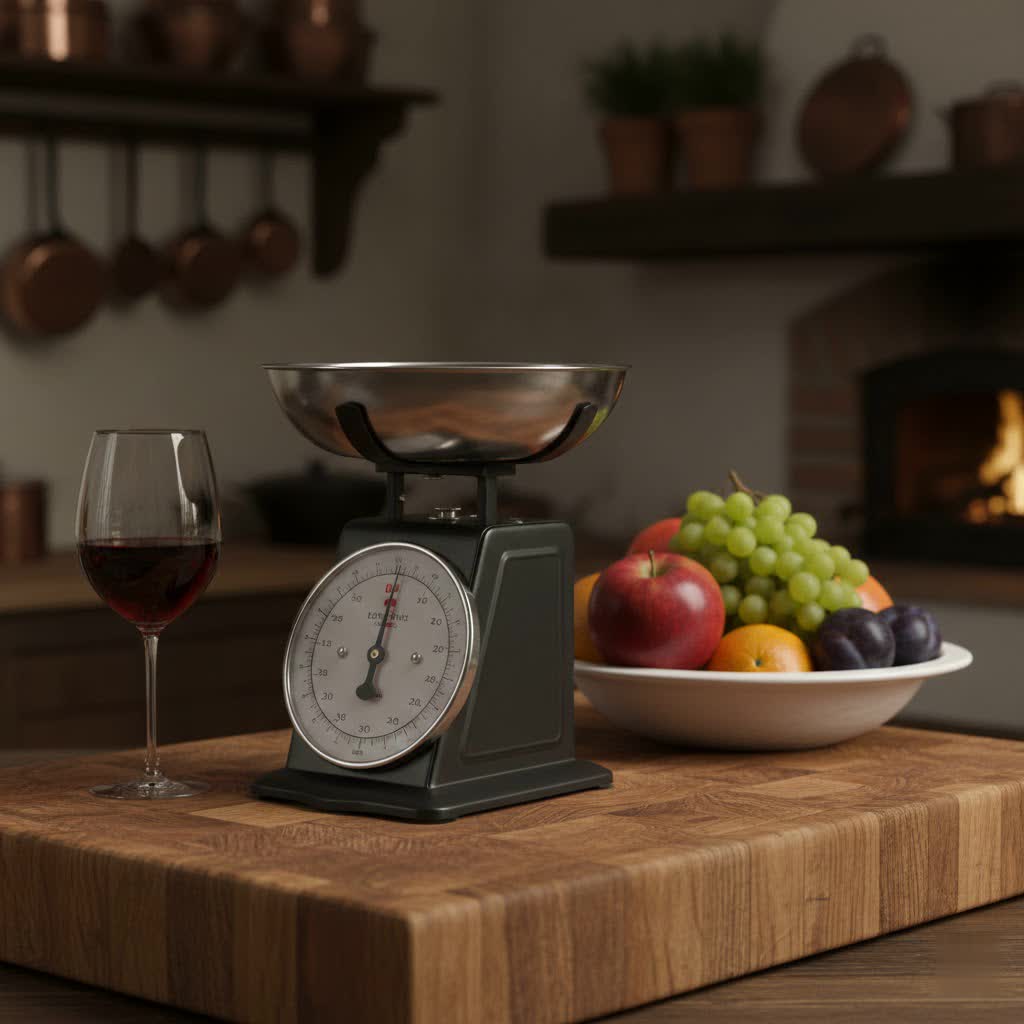
While offering a vintage aesthetic and not requiring batteries, mechanical (analog) scales generally lack the precision and fine increments of digital models. They are less suitable for tasks demanding exact measurements and are typically reserved for rougher estimations or decorative purposes.
What to Look for in the Most Precise Kitchen Scale
When seeking out a kitchen scale where precision is paramount, several factors come into play beyond just the initial reading.
- Measurement Increments (Resolution): This is the smallest unit of weight the scale can detect. For most cooking, a 1-gram increment is adequate. However, for high-precision tasks like specific baking formulas or coffee brewing, look for scales that measure in 0.1-gram or even 0.01-gram increments. The smaller the increment, the more precise your measurements will be.
- Consistency Across Weight Range: A truly precise scale will maintain its accuracy whether you’re weighing a few grams or several kilograms. Some scales perform well with larger weights but struggle with tiny amounts, or vice-versa. Reputable reviews often test for this consistency across various weight ranges.
- Capacity: Consider your typical needs. Standard kitchen scales usually handle up to 11-15 pounds (5-7 kg), which is ample for most recipes. If you frequently bake large batches or weigh substantial items, a higher capacity is beneficial. For micro-measurements, accept that high-precision scales will have a much lower maximum capacity (e.g., 100g or 3kg).
- Units of Measurement: Ensure the scale offers the units you need: grams, ounces, and pounds are standard. Some scales also include milliliters or fluid ounces, but exercise caution. These volumetric units are accurate for water but can be misleading for ingredients with different densities, like honey or oil. A good scale will allow you to easily switch between units.
- Essential Features:
- Tare Function: This crucial feature allows you to zero out the weight of a container or previous ingredient, making it effortless to measure multiple ingredients in the same bowl.
- Readable Display: A large, backlit, high-contrast display is vital for easy reading, especially in varying kitchen lighting. Scales with pull-out or angled displays prevent large bowls from obscuring the screen.
- Auto-Off Function: While battery-saving, an auto-off feature can be frustrating if it’s too short. Look for models with adjustable auto-off times or a longer standby mode that retains the last measurement.
- Durability and Material: Stainless steel or glass platforms are often more durable and easier to clean than plastic. Sealed buttons prevent flour or liquid from getting trapped in crevices. Non-slip feet ensure stability during use.
- Calibration: Over time, all scales can drift. Some high-end scales offer a calibration mode, often requiring a known calibration weight (or even a U.S. nickel, which weighs exactly 5 grams). Regular calibration checks help maintain accuracy.
Top Contenders: Reviews of the Most Precise Kitchen Scales
Finding the perfect balance of accuracy, features, and price can be a challenge. Here are some of the Most Precise Kitchen Scales frequently praised in expert testing and user reviews:
Etekcity Digital Kitchen Scale
This scale is frequently lauded as a best overall value, combining impressive accuracy with an affordable price. It’s flat, sturdy, and measures up to 11 pounds in 1-gram increments. While its digital display can be small, it’s brightly backlit. Its precision and consistency in tests often rival more expensive models, making it an excellent entry point for home cooks seeking reliable measurements.
OXO Good Grips Stainless Steel Food Scale with Pull-Out Display
A consistent favorite among culinary professionals and serious home cooks, the OXO Good Grips scale stands out for its user-friendly design and robust accuracy. Its innovative pull-out display solves the common problem of large mixing bowls obscuring the screen. It measures up to 11 pounds with good general accuracy and offers a thoughtful 15-minute standby mode that retains the last measurement. The removable weighing platform also makes cleaning easier.
Escali Primo Digital Food Scale
The Escali Primo is a popular choice for its intuitive interface, compact size, and reliable accuracy. It can measure up to 11 pounds, typically in 1-gram (0.05-ounce) increments. Its sealed buttons are a plus for easy cleaning, and it offers clear, easy-to-read measurements. While generally very accurate, some tests note it might be slower to register extremely small, incremental additions of weight compared to ultra-fine precision scales.
Ooni Dual Platform Digital Scale
For dedicated bakers who require both high capacity and micro-precision, the Ooni Dual Platform scale is a top contender. It features two separate scales: a large platform for up to 22 pounds and a smaller, highly sensitive platform capable of measuring down to 0.2 grams. This makes it ideal for sourdough bakers or pizza enthusiasts who need exact measurements for yeast and salt alongside larger quantities of flour.
My Weigh KD-8000 Digital Food Scale
Dubbed a “baker’s dream,” the My Weigh KD-8000 is known for its high precision and specialized features. It boasts a high capacity (up to 17.6 pounds), an elevated and angled display for better visibility, and a baker’s percentage mode invaluable for professional-style baking formulas. Uniquely, its auto-off feature can be adjusted or even disabled, a significant advantage for long or complex tasks. It also features a hold button to freeze measurements and a removable platform for easy cleaning.
Weigh Gram Digital Pocket Scale
When only the absolute finest precision will do, a dedicated pocket scale like the Weigh Gram Digital Pocket Scale is hard to beat. This tiny device measures in astounding 0.01-gram increments, making it perfect for micro-dosing spices, rare herbs, or extremely sensitive ingredients. Its major drawback is its very low capacity, typically maxing out at 100 grams, rendering it unsuitable for larger items.
Comparison Table: Precision Kitchen Scales at a Glance
| Model | Max Capacity (approx.) | Smallest Increment | Key Precision Feature(s) | Price Range | Ideal For |
|---|---|---|---|---|---|
| Etekcity Digital Kitchen Scale | 11 lbs (5 kg) | 1 gram / 0.04 oz | Consistent accuracy for its price | Budget | Everyday cooking, general baking, value-conscious users |
| OXO Good Grips Stainless Steel | 11 lbs (5 kg) | 1 gram / 0.1 oz | Consistent accuracy, pull-out display for clear reading | Mid-range | General baking, large bowls, consistent home cooking |
| Escali Primo Digital Food Scale | 11 lbs (5 kg) | 1 gram / 0.05 oz | User-friendly, good general accuracy | Budget | Casual home cooks, general measurements |
| Ooni Dual Platform Digital Scale | 22 lbs / 0.4 lbs | 1 gram / 0.2 gram | Dual platforms for high capacity & extreme micro-precision | Splurge | Serious bakers, intricate recipes, coffee weighing |
| My Weigh KD-8000 Digital | 17.6 lbs (8 kg) | 1 gram / 0.05 oz | Baker’s percentage, adjustable auto-off, high capacity | Mid-range | Professional and serious home bakers, complex formulas |
| Weigh Gram Digital Pocket Scale | 100 grams | 0.01 gram | Ultra-fine increments for minuscule amounts | Budget | Spices, herbs, coffee beans, molecular gastronomy, jewelry weighing |
Mastering Your Scale: Usage and Maintenance Tips for Optimal Precision
Even the most advanced kitchen scale requires proper handling to maintain its precision and longevity.
- Flat, Stable Surface: Always place your scale on a level, solid countertop. Uneven surfaces can lead to inaccurate readings.
- Utilize the Tare Function: Place your empty bowl or container on the scale first, then press the “tare” button to zero out the weight before adding your ingredients. This ensures you’re only measuring the ingredients themselves.
- Avoid Overloading: Never exceed your scale’s maximum weight capacity. This can damage the internal sensors and permanently affect its accuracy.
- Clean Carefully: Most digital scales are not waterproof. Wipe them down with a slightly damp cloth after use. For powdery messes like flour, a dry cloth or brush first can prevent residue from turning into a sticky paste in crevices. If your scale has a removable platform, clean it separately.
- Battery Health: Inconsistent readings can often be attributed to low batteries. Replace them promptly when you notice irregularities or if a low battery indicator appears.
- Regular Calibration: If your scale has a calibration option, use it regularly with a known weight (like a set of calibration weights or even clean U.S. nickels). Consult your owner’s manual for specific instructions.
Where to Purchase Your Precision Kitchen Scale
Precision kitchen scales are widely available both online and in brick-and-mortar stores. Major online retailers like Amazon, Walmart, and specialty kitchen supply websites offer a vast selection, often with detailed customer reviews and competitive pricing. Dedicated kitchenware stores or electronics retailers might also carry a selection.
When purchasing, always read product reviews, especially those focusing on accuracy and durability. Check the warranty offered by the manufacturer, as a good warranty can provide peace of mind in case of defects. While price and quality aren’t always directly correlated, investing in a reputable brand with a proven track record for accuracy is often a wise decision.
Conclusion
A precise kitchen scale is more than just a gadget; it’s a fundamental tool for any cook or baker who values consistency, accuracy, and the pursuit of culinary excellence. From ensuring your sourdough rises perfectly to perfecting your morning pour-over, the right scale empowers you to confidently execute recipes with exact measurements. By understanding the difference between accuracy and precision, knowing what features to prioritize, and choosing from our top recommendations, you can find a scale that meets your specific needs. Embrace the power of precision in your kitchen, and unlock a new level of control and success in your cooking adventures.
What precise measurements will you conquer first with your new kitchen scale?
Frequently Asked Questions
Is an expensive kitchen scale always more accurate?
Not necessarily. While high-end scales can offer advanced features and specialized precision (like 0.01g increments or dual platforms), many affordable digital kitchen scales provide excellent accuracy for everyday cooking and baking. Expert tests often show that cost and performance aren’t always closely related, with some budget-friendly models outperforming pricier options in general accuracy tests.
How often should I calibrate my kitchen scale?
The frequency of calibration depends on how often you use your scale and your need for extreme precision. For most home cooks, checking calibration every few months or whenever you suspect inconsistencies is sufficient. If you use a high-precision scale daily for critical tasks, more frequent checks, perhaps weekly or monthly, are recommended. Always refer to your scale’s user manual for specific calibration instructions.
Can I use a regular kitchen scale for coffee or spices?
While a standard digital kitchen scale (measuring in 1-gram increments) can work for general coffee or spice measurements, it may not be precise enough for optimal results. For brewing pour-over coffee, dialing in espresso shots, or measuring potent spices and yeast in tiny quantities, a dedicated coffee scale or pocket scale with 0.1-gram or 0.01-gram increments is highly recommended for superior accuracy.
What’s the ideal weight capacity for a precise kitchen scale?
The ideal weight capacity depends on your primary use. For most general cooking and baking, a scale with an 11-pound (5 kg) capacity is sufficient. If you frequently weigh large quantities for meal prep or baking big batches, a higher capacity (e.g., 15-22 pounds) is beneficial. For ultra-fine measurements of small ingredients, you might need a separate precision scale with a much lower capacity, such as 100 grams or 3 kilograms.
Why are volume measurements unreliable for dry ingredients?
Volume measurements, like cups or tablespoons, are inherently unreliable for dry ingredients such as flour, sugar, or cocoa powder because their density can vary significantly. Factors like how tightly an ingredient is packed, humidity, and even the method of scooping can cause a “cup” of flour to weigh differently each time. Measuring by weight with a precise kitchen scale eliminates these variables, ensuring consistent and accurate results every time.
