In the intricate world of cooking and baking, where every gram can make the difference between a masterpiece and a mishap, precision is not just a preference—it’s a necessity. While traditional measuring cups and spoons offer a rough guide, they often fall short when exactness is paramount. Enter the precision kitchen scale, an indispensable tool that transforms guesswork into guaranteed accuracy, empowering you to consistently achieve perfect results in all your culinary endeavors. If you’re ready to unlock new levels of consistency and flavor in your kitchen, understanding and owning a precision kitchen scale is your next essential step.
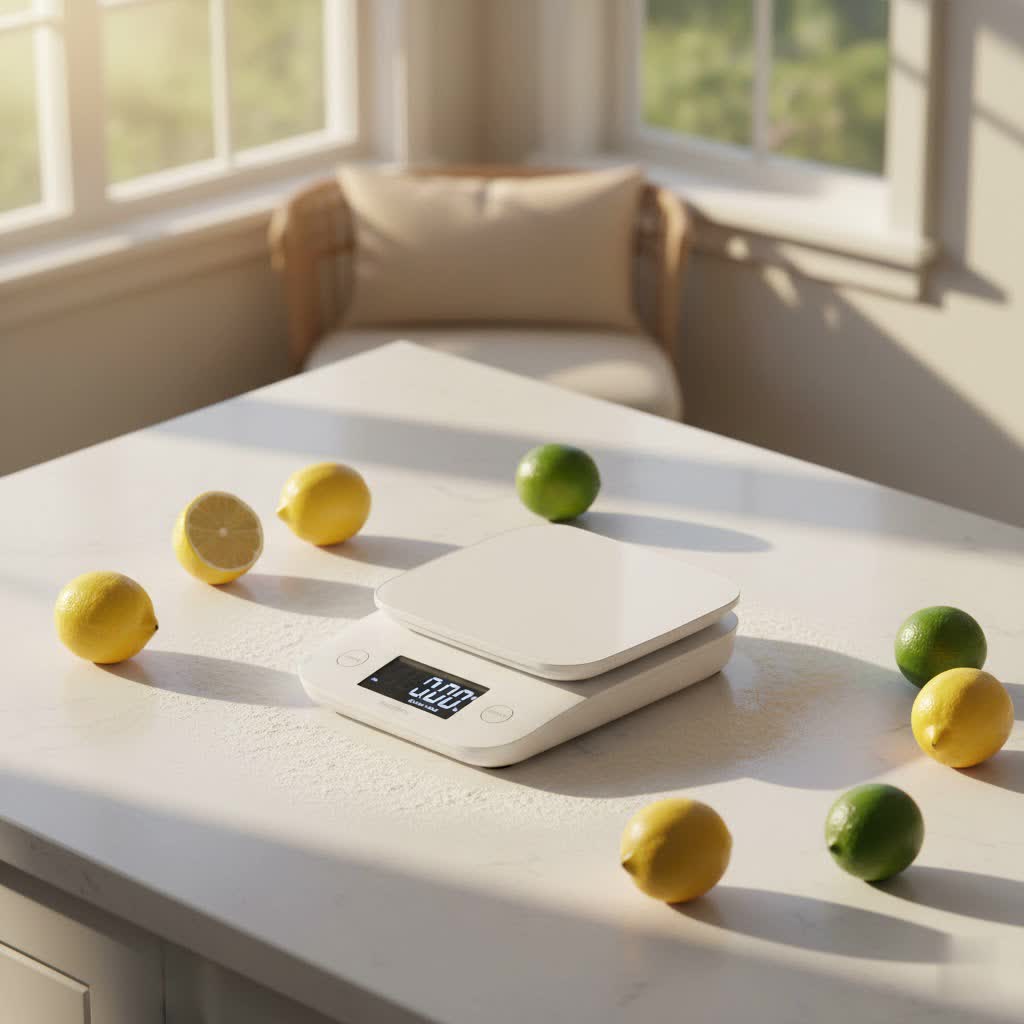
Why a Precision Kitchen Scale is Indispensable in Your Kitchen
The heart of exceptional cooking and baking lies in consistent, accurate measurements. Unlike cooking, which often allows for improvisation, baking is a science, relying on precise chemical reactions between ingredients. Even minor discrepancies in ingredient quantities—especially for dry components like flour, sugar, or yeast—can dramatically alter texture, rise, and flavor. A precision kitchen scale eliminates the inherent inaccuracies of volume measurements, where factors like how tightly ingredients are packed or even humidity can cause variations.
Beyond the realm of delicate pastries and artisan breads, a precision kitchen scale offers a multitude of benefits for every home chef:
- Unrivaled Consistency: Replicate your favorite recipes with confidence, ensuring every dish turns out just as delicious as the last. This is particularly crucial for complex recipes or when scaling batches up or down.
- Optimized Portion Control: For those managing dietary intake, a scale provides exact measurements for calorie and macronutrient tracking, making healthy eating plans far more effective.
- Reduced Food Waste: Measure out precisely what you need, minimizing excess and saving valuable ingredients from going to waste.
- Enhanced Efficiency: The tare function allows you to weigh multiple ingredients into a single bowl, streamlining your workflow and reducing cleanup time. No more piles of measuring cups and spoons!
- Perfect Coffee and Beverages: Achieve the ideal water-to-coffee ratio for pour-overs or espresso, or craft perfectly balanced cocktails with exact liquid measurements.
With a precision kitchen scale, you’re not just measuring ingredients; you’re investing in a tool that elevates your skills, boosts your confidence, and consistently delivers superior culinary outcomes.
Unpacking the Different Types of Precision Kitchen Scales
While the term “kitchen scale” might seem straightforward, the world of precision weighing offers diverse options tailored to various needs. Understanding the distinctions will help you choose the perfect fit for your culinary journey.
Digital Kitchen Scales
The most common and versatile type, digital scales utilize electronic sensors to provide fast, highly accurate readings on an easy-to-read LCD display. They are the go-to for most home cooks and bakers due to their reliability and range of features.
- Advantages:
- High Accuracy: Typically measure to the nearest gram (1g) or tenth of a gram (0.1g), making them significantly more precise than mechanical scales.
- User-Friendly Features: Almost universally include a tare function, unit conversion (grams, ounces, pounds, milliliters), and often a backlit display for readability.
- Compact Design: Many are slim and lightweight, allowing for easy storage.
- Disadvantages:
- Battery Dependent: Require batteries or a power source.
- Sensitivity to Environment: Can be affected by vibrations or extreme temperature changes.
|
Our Picks for the Best Kitchen Scale in 2026
As an Amazon Associate I earn from qualifying purchases.
|
||
| Num | Product | Action |
|---|---|---|
| 1 | Food Scale, 11lb Digital Kitchen Scale with 6 Units LCD Display and Tare Function,Compact Design for Baking,Healthy Cooking,Meal Prep, 304 Stainless Steel |

|
| 2 | Digital Kitchen Food Scale 33lb-Detachable LCD Display,1g/0.1oz Precise Electronic Weight Scale for Baking, Tare/Hold/Timer Function, Glass Platform, Count Mode, Wall-Mount & Tilt Stand |
|
| 3 | Nicewell Food Scale, 22lb Digital Kitchen Scale Weight Grams and oz for Cooking Baking, 1g/0.1oz Precise Graduation, Stainless Steel and Tempered Glass (Ash Silver) |
|
| 4 | Food Scale -33lb Digital Kitchen Scale for Food Ounces Grams Rechargeable 304 Stainless Steel,Batteries and Type-C Charging - Perfect for Meal Prep, Cooking, and Baking, Black |
|
| 5 | KitchenAid KQ908 Glass Surface 11 Pound Capacity Digital Kitchen and Food Scale, Black |
|
| 6 | Etekcity Food Kitchen Scale, Digital Grams and Ounces for Weight Loss, Baking, Cooking, Keto and Meal Prep, LCD Display, Medium, 304 Stainless Steel |
|
| 7 | OXO Good Grips 11-Pound Stainless Steel Kitchen Scale with Pull-Out Display - Black |
|
| 8 | Etekcity Digital Food Kitchen Scale, Grams and Oz for Weight Loss, Baking and Cooking, 0.05oz/1g Precise Graduation,5 Weight Units, IPX6 Waterproof, USB Rechargeable,304 Stainless Steel-Silver, 22lb |
|
| 9 | Amazon Basics Digital Kitchen Scale with LCD Display, Tare Function, Multiple Units, Weighs up to 11 Pounds, Batteries Included, Black and Stainless Steel |
|
| 10 | Mik-Nana Food Scale, 10kg/22lb Digital Kitchen Scale Weight Grams and Ounces for Baking Cooking Coffee Package Postage, 6 Units with Tare Function, LCD Display, Easy Clean Stainless Steel |
|
High-Precision/Pocket Scales
For tasks demanding extreme exactness, high-precision scales, often referred to as pocket scales or jeweler’s scales, offer a finer resolution, typically measuring to 0.01g. These are specialized tools for minute quantities.
- Advantages:
- Exceptional Precision: Ideal for weighing tiny amounts of ingredients like yeast, saffron, critical spices, or for scientific cooking applications where even a fraction of a gram matters.
- Portability: Often very small and battery-operated, making them easy to move and store.
- Disadvantages:
- Lower Capacity: Generally have a much smaller maximum weight limit (e.g., 500g), making them unsuitable for larger ingredients or batches.
- Less Versatile: Not designed for everyday, high-capacity kitchen tasks.
Dual-Platform Scales
An innovative solution for diverse kitchen needs, dual-platform scales combine two separate weighing surfaces within a single unit. One platform is typically a standard digital scale with a higher capacity, while the other is a smaller, high-precision scale.
- Advantages:
- Versatility: Offers the best of both worlds, allowing you to weigh large quantities of flour on one platform and precise amounts of yeast on the other simultaneously.
- Space-Saving: Consolidates two essential tools into one, optimizing counter and storage space.
- Disadvantages:
- Higher Cost: Generally more expensive than single-platform models.
- Potential for Complexity: Can sometimes be a bit more complicated to use if not intuitively designed.
While mechanical scales exist, their lower precision typically makes them less suitable for the “precision” focus. Digital scales, in their various forms, are the undisputed champions for accuracy in the modern kitchen.
Key Factors to Consider When Buying a Precision Kitchen Scale
Choosing the right precision kitchen scale involves evaluating several critical aspects to ensure it meets your specific culinary demands and seamlessly integrates into your kitchen workflow.
Accuracy and Precision
This is the most crucial factor. A truly precise scale should offer readings to at least 0.1 gram (g) for general baking and cooking. For highly specialized tasks like molecular gastronomy, brewing specific coffee ratios, or extremely delicate recipes, a scale with 0.01g resolution might be preferred. Understand that accuracy refers to whether the measurement is correct, while precision refers to the smallest increment the scale can display. A good precision scale offers both.
Weight Capacity (Maximum Load)
Consider the largest items or batches you typically weigh. Most standard digital kitchen scales offer a capacity of around 5 kg (11 lbs), which is sufficient for most home cooking and baking needs. If you often prepare large quantities or weigh substantial cuts of meat, a higher capacity (e.g., 15 kg or 33 lbs) might be beneficial, or a dual-platform model. Conversely, if you only need to weigh tiny amounts, a dedicated high-precision pocket scale will suffice.
Units of Measurement
Ensure the scale offers all the units you’ll need. Common units include grams (g), ounces (oz), pounds (lb), milliliters (ml), and fluid ounces (fl oz). The ability to easily switch between metric and imperial units is a significant convenience, especially when working with recipes from different regions. Grams are generally recommended for precision as they provide finer increments.
Essential Features
Modern precision scales come with features that greatly enhance usability:
- Tare Function: Absolutely essential. This allows you to zero out the weight of a bowl or previous ingredients, so you only measure the current item. It’s vital for adding multiple ingredients to one container.
- Backlit Display: Improves readability, especially in dimly lit kitchens or when shadows fall on the screen.
- Auto-Off Function: A power-saving feature that turns off the scale after a period of inactivity. Look for models with an adjustable auto-off time or one that remembers your last measurement for convenience.
- Pull-Out Display: For scales with a flat platform, a pull-out display prevents large mixing bowls or plates from obscuring the screen.
- Sealed Buttons: Protects against spills and makes cleaning easier, particularly important in a busy kitchen environment.
Material and Design
The construction material impacts durability, ease of cleaning, and aesthetics:
- Stainless Steel: Durable, corrosion-resistant, and easy to wipe clean, making it a popular choice for both home and professional kitchens.
- Tempered Glass: Offers a sleek, modern look and is very easy to clean. However, it can be more fragile if dropped or mishandled.
- Plastic: Generally more affordable and lightweight, but may be less durable and can stain or scratch over time.
Consider the scale’s footprint and how it will fit into your kitchen. A compact, slim design is ideal for easy storage.
Price
Precision kitchen scales range from budget-friendly to high-end. While cost can correlate with features and build quality, many affordable models offer excellent accuracy and essential functions. Determine your budget and prioritize the features most important to you.
Leading Precision Kitchen Scale Models: A Comparative Look
When it comes to selecting a top-tier precision kitchen scale, certain models and brands consistently receive accolades for their accuracy, durability, and user-friendly features. While specific model availability may vary, these represent the best in class for different needs.
- OXO Good Grips Stainless Steel Food Scale with Pull-Out Display: A long-standing favorite, this model is renowned for its reliability and thoughtful design. The pull-out display is a game-changer for visibility, especially when using large bowls. It typically offers measurements in 1-gram increments, perfect for most baking and cooking. Its sturdy stainless steel platform is also a plus for durability and easy cleaning.
- Escali Primo Digital Food Scale: Often cited as a “best overall” or “best budget” option, the Escali Primo is celebrated for its consistent accuracy, vibrant color options, and simple interface. It measures in 1-gram (0.05 oz) increments up to 11 pounds, making it a versatile choice for everyday use. Its sealed buttons protect against spills, and its compact size ensures easy storage.
- Ooni Dual Platform Digital Scale: For serious bakers and those who demand both high capacity and minute precision, the Ooni Dual Platform is an excellent choice. It features two separate weighing surfaces: a larger one for general ingredients and a smaller, highly precise one for amounts as small as 0.1 or 0.2 grams, ideal for yeast or coffee. This model excels for intricate doughs and specific ingredient ratios.
- My Weigh KD-8000 Digital Food Scale: Highly praised by professional bakers, this scale offers exceptional precision, a baker’s percentage mode, and a removable, elevated platform. It’s built for heavy-duty use and provides consistent, accurate readings, making it a favorite for those who bake frequently or work with complex formulas.
- Etekcity Digital Kitchen Scale: A popular choice for its affordability and reliable performance, the Etekcity scale consistently delivers accurate measurements for daily kitchen tasks. While it might not have all the bells and whistles of premium models, its slim profile, easy-to-clean surface, and dependable accuracy make it a great value option.
When comparing models, always prioritize those with a reputation for consistent accuracy, a tare function, clear displays, and a capacity that matches your cooking habits. Reading recent user reviews can also provide valuable insights into real-world performance.
How to Use and Maintain Your Precision Kitchen Scale
Maximizing the lifespan and accuracy of your precision kitchen scale involves proper usage and regular maintenance.
Basic Usage
Using a digital kitchen scale is remarkably straightforward:
- Place on a Stable, Level Surface: Ensure the scale is on a flat, sturdy surface, free from vibrations, to guarantee accurate readings.
- Power On and Select Unit: Turn on the scale and select your desired unit of measurement (e.g., grams, ounces).
- Tare the Container: Place an empty bowl or plate on the scale. Press the “Tare” or “Zero” button. The display will reset to zero, effectively subtracting the container’s weight. This allows you to add ingredients directly into the bowl.
- Add Ingredients: Slowly add your ingredients until the desired weight is displayed. For multiple ingredients in the same bowl, simply press “Tare” again after adding each component to zero the scale before adding the next.
Calibration: The Key to Lasting Accuracy
Even high-quality digital scales can drift over time due to temperature changes, everyday use, or accidental knocks. Regular calibration is crucial to maintain their accuracy.
- Why Calibrate? Calibration resets your scale’s internal settings, ensuring its measurements align with known standards. For baking, where exact ratios are critical, an uncalibrated scale can lead to inconsistent results.
- How to Calibrate:
- Obtain Calibration Weights: Ideally, use certified calibration weights (e.g., 100g or 200g) that match your scale’s capacity. Avoid using household items like coins, as their weights can vary.
- Prepare the Scale: Place the scale on a hard, level surface. Turn it on and let it stabilize. Ensure the weighing platform is clean.
- Enter Calibration Mode: Refer to your scale’s manual. Most scales have a “CAL” or “Mode” button that you press and hold to enter calibration mode. The display might flash “CAL” or prompt you for a weight.
- Place Weight: When prompted, gently place the specified calibration weight in the center of the platform. The scale should register the correct weight and then indicate calibration is complete.
- Verify: After calibration, remove the weight and check that the scale returns to zero. You can then re-weigh the calibration weight to verify accuracy.
- When to Calibrate: It’s recommended to calibrate your scale monthly, or before any highly precise baking or cooking tasks. Always perform a quick “zero check” (tare with nothing on the scale) before each use.
Cleaning and Storage
To extend your scale’s life, wipe it down with a damp cloth after each use, especially if spills occur. Avoid immersing it in water unless it’s specifically waterproof. Store it in a dry place where it won’t be exposed to extreme temperatures or rough handling.
Where to Buy Your Precision Kitchen Scale
Investing in a quality precision kitchen scale is an investment in your culinary success. You can find these essential tools through various reputable channels:
- Online Retailers: Websites like Amazon, Walmart, and specialty kitchen supply stores offer a vast selection, often with competitive pricing and detailed customer reviews. This provides convenience and a broad range of options.
- Department Stores and Home Goods Stores: Many large retail chains carry a selection of kitchen scales, allowing you to see and feel the product before purchasing.
- Specialty Culinary Stores: These shops often have knowledgeable staff who can guide you to models best suited for specific cooking or baking needs, and may offer higher-end or unique precision scales.
When purchasing, particularly online, always check the retailer’s return policy and warranty information. Look for brands with a good reputation for customer service and product reliability. Reading recent customer feedback can also provide insight into the product’s real-world performance and durability.
Conclusion
A precision kitchen scale is far more than just another gadget; it’s a fundamental tool that empowers you to achieve culinary excellence with unparalleled consistency and accuracy. By eliminating the guesswork of volume measurements, it ensures your recipes, especially in baking, turn out perfectly every time. From mastering complex bread formulas and delicate desserts to managing portions for a healthier lifestyle, the benefits are clear and profound.
Choosing the right scale involves considering its accuracy, capacity, and essential features like the tare function and unit conversion. With proper usage, including regular calibration, your precision kitchen scale will be a trusted companion in your kitchen for years to come. Are you ready to transform your cooking and baking from guesswork into guaranteed success?
Frequently Asked Questions
What is the primary difference between accuracy and precision in kitchen scales?
Accuracy refers to how close a measurement is to the true value, while precision refers to how consistently a scale can reproduce the same measurement repeatedly to a fine degree (e.g., 0.1g or 0.01g). A good precision kitchen scale should ideally be both accurate and highly precise.
Can I use my precision kitchen scale for non-food items?
Yes, many precision kitchen scales are versatile and can be used for weighing small non-food items like craft supplies, small parcels for mailing, or even pet food portions, provided they fall within the scale’s weight capacity.
How often should I calibrate my digital kitchen scale?
It’s generally recommended to calibrate your digital kitchen scale monthly, or more frequently if you use it for highly precise tasks, notice inconsistent readings, or if it has been dropped or moved frequently. Always perform a quick zero check before each use.
What does the “tare” function do on a kitchen scale?
The tare function allows you to reset the scale to zero after placing a container (like a bowl) on it, or after adding an ingredient. This way, you only measure the weight of the new ingredient being added, making it easy to measure multiple items in the same container.
