Achieving culinary perfection often hinges on one crucial element: precision. While volume measurements like cups and spoons can suffice for some recipes, the world of baking and advanced cooking demands the exactitude that only a reliable kitchen scale can provide. Forget guesswork and inconsistent results; integrating a kitchen scale into your routine elevates your cooking, ensuring repeatable success and empowering you to explore complex recipes with confidence. This guide delves into expert-recommended kitchen scales, reflecting the rigorous testing standards of top review sites, to help you choose the ideal tool for your kitchen.
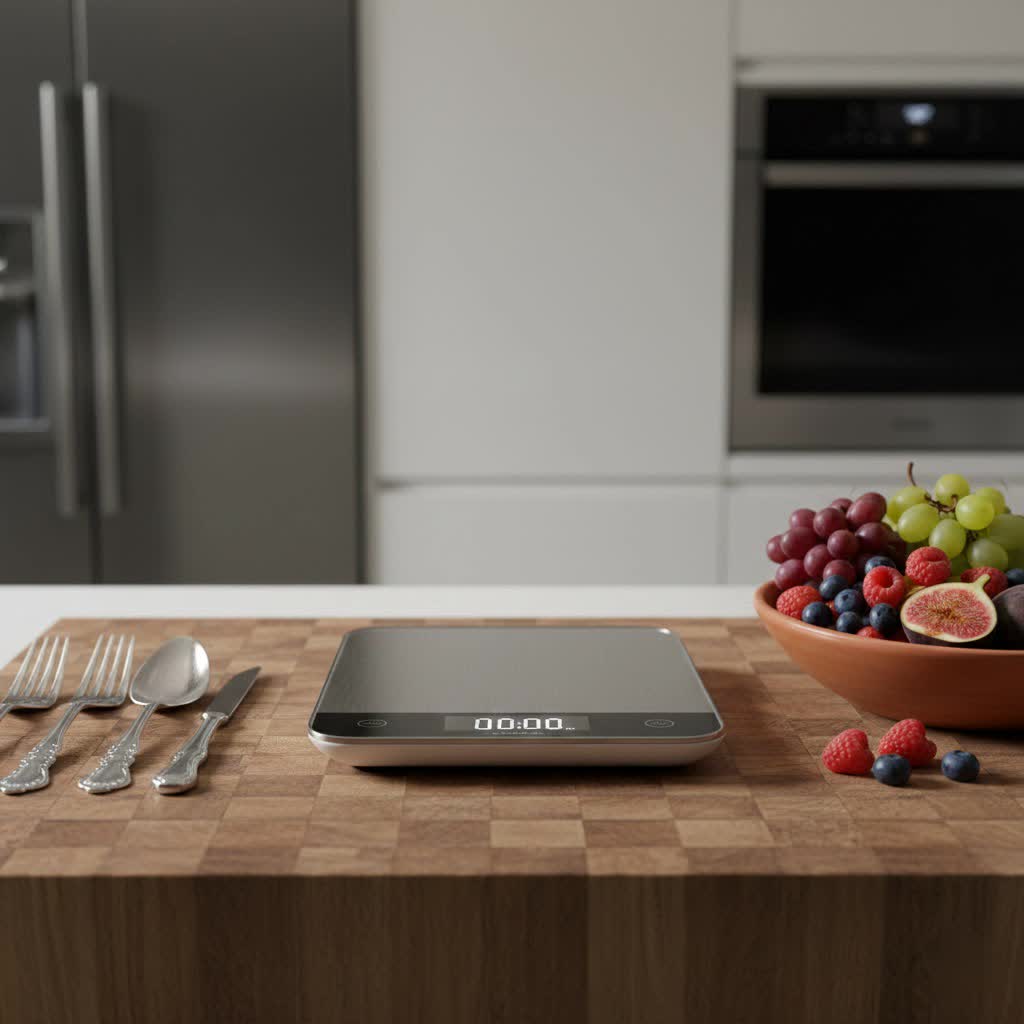
Why You Need a Kitchen Scale
|
Our Picks for the Best Kitchen Scale in 2026
As an Amazon Associate I earn from qualifying purchases.
|
||
| Num | Product | Action |
|---|---|---|
| 1 | Food Scale -33lb Digital Kitchen Scale for Food Ounces Grams Rechargeable 304 Stainless Steel,Batteries and Type-C Charging - Perfect for Meal Prep, Cooking, and Baking, Black |

|
| 2 | OXO Good Grips 11-Pound Stainless Steel Kitchen Scale with Pull-Out Display - Black |
|
| 3 | KitchenAid KQ908 Glass Surface 11 Pound Capacity Digital Kitchen and Food Scale, Black |
|
| 4 | Amazon Basics Digital Kitchen Scale with LCD Display, Tare Function, Multiple Units, Weighs up to 11 Pounds, Batteries Included, Black and Stainless Steel |
|
| 5 | Mik-Nana Food Scale, 10kg/22lb Digital Kitchen Scale Weight Grams and Ounces for Baking Cooking Coffee Package Postage, 6 Units with Tare Function, LCD Display, Easy Clean Stainless Steel |
|
| 6 | Etekcity Digital Food Kitchen Scale, Grams and Oz for Weight Loss, Baking and Cooking, 0.05oz/1g Precise Graduation,5 Weight Units, IPX6 Waterproof, USB Rechargeable,304 Stainless Steel-Silver, 22lb |
|
| 7 | Digital Kitchen Food Scale 33lb-Detachable LCD Display,1g/0.1oz Precise Electronic Weight Scale for Baking, Tare/Hold/Timer Function, Glass Platform, Count Mode, Wall-Mount & Tilt Stand |
|
| 8 | Food Scale, 11lb Digital Kitchen Scale with 6 Units LCD Display and Tare Function,Compact Design for Baking,Healthy Cooking,Meal Prep, 304 Stainless Steel |
|
| 9 | Etekcity Food Kitchen Scale, Digital Grams and Ounces for Weight Loss, Baking, Cooking, Keto and Meal Prep, LCD Display, Medium, 304 Stainless Steel |
|
| 10 | Nicewell Food Scale, 22lb Digital Kitchen Scale Weight Grams and oz for Cooking Baking, 1g/0.1oz Precise Graduation, Stainless Steel and Tempered Glass (Ash Silver) |
|
A kitchen scale is an indispensable tool for any serious cook or baker, offering unparalleled accuracy and consistency in your culinary endeavors. Unlike volume measurements, which can vary significantly depending on how ingredients are packed, weighing ingredients provides a precise quantity every time. This scientific approach is particularly critical in baking, where slight discrepancies in flour or sugar can drastically alter the final texture and taste of your creation.
Beyond baking, a kitchen scale simplifies various kitchen tasks, from portion control for healthy eating to precisely measuring ingredients for complex dishes or even home-brewed coffee. It minimizes mess by allowing you to add multiple ingredients to a single bowl, taring the scale between each addition, and can even be used for non-food tasks like weighing small packages for mailing. Ultimately, a kitchen scale ensures consistent, delicious results and makes your cooking process more efficient and enjoyable.
Types of Kitchen Scales
When choosing a kitchen scale, you’ll primarily encounter digital models, though mechanical scales still exist. Each type offers distinct advantages and disadvantages.
Digital Kitchen Scales
Digital scales are the most popular choice for modern kitchens due to their precision and array of features. They typically use electronic sensors to provide exact weight readings on a digital display.
- Advantages:
- High Accuracy: Digital scales generally offer precise measurements, often down to the gram or tenth of an ounce.
- Clear Displays: Most feature backlit LCD screens that are easy to read.
- Multiple Units: They can usually switch between grams, ounces, pounds, and kilograms with the press of a button.
- Tare Function: This essential feature allows you to reset the scale to zero after placing a container, or between adding multiple ingredients to the same bowl.
- Disadvantages:
- Battery Dependent: They require batteries or an AC adapter to operate.
- Electronic Interference: Can sometimes be affected by nearby electronic devices, leading to inaccurate readings.
- Durability: While many are built to last, some models may be more susceptible to damage from drops or liquid exposure.
Mechanical Kitchen Scales
Mechanical scales, also known as analog scales, rely on springs and levers to measure weight, displaying it with a needle on a dial.
- Advantages:
- No Batteries: They operate without power, making them always ready for use.
- Durability: Often more robust and less prone to electronic malfunctions.
- Disadvantages:
- Lower Precision: Generally less accurate than digital scales, making them unsuitable for recipes requiring exact measurements.
- Bulkier: Can be larger and heavier, taking up more counter or storage space.
- Harder to Read: The dial can be difficult to read precisely, especially for small increments.
For most home cooks and bakers seeking accuracy and versatility, a digital kitchen scale is the superior choice.
Factors to Consider When Buying a Kitchen Scale
Choosing the right kitchen scale involves evaluating several key features to ensure it meets your specific cooking and baking needs.
- Accuracy: The most critical factor, a good kitchen scale should be consistently accurate within one gram across its weighing range. While most scales can accurately weigh items down to five grams, general-use kitchen scales may struggle with quantities below 10 grams, where precision scales (like coffee scales) excel.
- Capacity (Max Weight): Consider the largest amount you’ll typically need to weigh. For general home use, a scale with a maximum capacity of at least 10 pounds (approximately 5 kilograms) offers sufficient versatility for most recipes, including large batches of dough or meal prep ingredients.
- Units of Measurement: Ensure the scale offers the units you commonly use, such as grams, ounces, and pounds. Be wary of scales that include misleading volumetric units like fluid ounces or milliliters, which can cause confusion and inaccurate measurements when used for ingredients denser than water. A “pounds-only” mode (displaying decimals of a pound) can also be a convenient feature.
- Display Readability: The display should be clear, easy to read, and ideally backlit. A crucial design element is ensuring the display remains visible even when a large mixing bowl or wide pan is placed on the weighing platform. Features like a pull-out display or an elevated, angled platform significantly enhance visibility.
- Usability & Additional Features:
- Tare Function: Absolutely essential, this feature allows you to zero out the weight of a container or subsequent ingredients.
- Buttons: Physical push buttons are generally preferred over touch-sensor buttons, as they offer better control and are less prone to accidental presses. Sealed buttons are a bonus, preventing gunk from accumulating in crevices.
- Auto-Off Function: While designed to save battery, a too-short auto-off can be frustrating. Look for scales with longer auto-off windows (5 minutes or more) or, ideally, an adjustable or disable-able auto-off feature. Some scales enter a standby mode that retains the last measurement for a period.
- Removable Weighing Platform: A removable tray simplifies cleaning, especially after weighing messy ingredients like raw meat or flour.
- Specialized Features: Bakers might appreciate features like baker’s percentage mode, which automatically calculates ingredient ratios based on flour weight.
- Material and Design: Look for durable materials that are easy to wipe clean. Stainless steel and tempered glass are common, offering both aesthetics and practicality. Consider the scale’s footprint if counter or storage space is limited.
- Price: Kitchen scales come in various price points. While expensive models exist, excellent and highly accurate options are available for under $60, proving that you don’t need to overspend for quality.
Comparing Top Kitchen Scales
Based on extensive testing and expert reviews, several kitchen scales consistently stand out for their accuracy, features, and overall value. Here’s a look at some of the best, with insights into their strengths and weaknesses.
Best Overall: OXO Good Grips Stainless Steel Food Scale with Pull-Out Display
The OXO Good Grips Stainless Steel Food Scale with Pull-Out Display is often lauded as a top performer, earning praise for its functional design and reliability.
- Pros: Its standout feature is the pull-out display, which extends away from the base, ensuring clear visibility even with large bowls or sheet pans on the platform. It boasts a generous 15-minute standby mode that saves the last measurement before fully powering off, a significant advantage over scales that shut off quickly. The scale features sealed physical push buttons that are easy to clean and prevent grime buildup, along with a removable weighing tray for thorough sanitization. It also includes a max capacity indicator, a low battery indicator, avoids misleading volume measurements, and remembers your last used unit.
- Cons: While highly accurate for everyday use, it may show minor discrepancies (e.g., one gram variance) at very small weights, typically below five grams, though for these tiny amounts, measuring spoons are often sufficient. The scale rounds measurements to the tenth of an ounce. Some users note that flour can occasionally hide underneath the scale bed and around the display.
- Key Specs:
- Dimensions: 9.75 x 7 x 1.25 inches
- Units: Ounces, pounds:ounces, grams, kilograms:grams
- Resolution: 0.1 ounce, 1 gram
- Maximum Weight: 11 pounds (5 kilograms)
- Auto Shut-Off: Power-saving standby mode for 15 minutes, then full power-off
- Power Source: Four AAA batteries
Best Budget: Escali Primo Digital Food Scale
For those seeking an affordable yet highly accurate option, the Escali Primo Digital Food Scale consistently receives high marks. It’s a favorite for casual bakers or those needing a compact, easy-to-store scale.
- Pros: This scale excels in accuracy across its full range, performing reliably in tests. It’s intuitive and simple to use, with sealed physical push buttons for easy cleaning. Its compact and lightweight design makes it highly portable and easy to tuck away. It measures with good precision, rounding to five-hundredths of an ounce, and features a reasonable four-minute auto shut-off.
- Cons: The main drawback is that its flat display can be obscured by larger bowls or pans, making it challenging to read measurements. The weighing tray is not removable, which can make cleaning slightly less convenient. It also lacks a dedicated pounds-only mode.
- Key Specs:
- Dimensions: 8.5 x 6 x 1.6 inches
- Units: Grams, ounces, pounds:ounces
- Resolution: 1 gram, 0.05 ounce
- Maximum Weight: 11 pounds (5 kilograms)
- Auto Shut-Off: Four minutes
- Power Source: Two AA batteries
Best for Bread Bakers: My Weigh KD-8000 Digital Food Scale
The My Weigh KD-8000 Digital Food Scale is a specialized tool often recommended for serious bakers due to its robust features and high precision.
- Pros: A significant advantage for bakers is the ability to disable the auto-off feature entirely, preventing the scale from turning off mid-recipe. Its elevated and angled display ensures excellent readability, even with bulky mixing bowls or dough-proofing boxes. It offers a higher maximum weight capacity (17.6 pounds) than many standard scales, and it can be recalibrated at home. The hold button freezes the last measurement, and it uniquely features a baker’s percentage mode, streamlining complex dough calculations. The platform tray is removable for cleaning, and it offers the flexibility of an AC adapter in addition to batteries.
- Cons: This is the bulkiest option, which might be a concern for kitchens with limited storage. The included protective display cover can be cumbersome to use, and changing settings (like auto-off duration) can be non-intuitive, often requiring the user manual. It also has a slightly slower startup time of about four seconds.
- Key Specs:
- Dimensions: 9.75 x 6.9 x 4 inches
- Units: Grams, ounces, kilograms, pounds, pounds:ounces, baker’s percentage
- Resolution: 1 gram, 0.05 ounce
- Maximum Weight: 17.6 pounds (8 kilograms)
- Auto Shut-Off: Adjustable (2, 5 minutes, or disabled)
- Power Source: AC adapter (recommended) or three AA batteries
Comparison Table: Top Kitchen Scales
| Feature | OXO Good Grips Stainless Steel Food Scale | Escali Primo Digital Food Scale | My Weigh KD-8000 Digital Food Scale |
|---|---|---|---|
| Max Weight | 11 lbs (5 kg) | 11 lbs (5 kg) | 17.6 lbs (8 kg) |
| Accuracy | High (minor variance <5g) | High (consistent) | High (near-perfect) |
| Display | Pull-out, backlit | Flat, unlit (can be obscured) | Elevated, angled, backlit |
| Tare Function | Yes | Yes | Yes |
| Auto-Off | 15 min standby, then full off | 4 minutes | Adjustable/Disable-able |
| Cleaning | Removable tray, sealed buttons | Sealed buttons, non-removable | Removable platform, sealed buttons |
| Special Features | Max capacity indicator, last unit memory | N/A | Baker’s percentage, Hold, AC option |
| Price Range | Mid-range | Budget | Mid-to-high range |
| Best For | General use, versatile cooking/baking | Budget-conscious, occasional use | Serious bakers, high capacity |
How to Use and Care for Your Kitchen Scale
Proper usage and maintenance are key to ensuring your kitchen scale remains accurate and serves you well for years.
Usage Tips
- Flat, Stable Surface: Always place your kitchen scale on a level, stable surface. Uneven surfaces can lead to inaccurate readings.
- Utilize the Tare Function: Before adding ingredients, place your empty container on the scale and press the “tare” or “zero” button to reset the display to zero. This ensures you only measure the weight of the ingredients. You can also tare the scale between adding different ingredients into the same bowl, streamlining your process and reducing dishes.
- Add Ingredients Gradually: For highly precise recipes, especially with potent ingredients like salt or yeast, add them slowly. This allows the scale to register minute changes accurately, avoiding cumulative errors.
Maintenance and Care
- Gentle Cleaning: Kitchen scales are rarely waterproof. Never immerse your scale in water or use harsh detergents. Instead, clean it by gently wiping the surface with a damp cloth after each use. For powdery messes like flour, wipe with a dry cloth first to prevent a sticky paste.
- Removable Platforms: If your scale has a removable weighing platform (like the OXO Good Grips or My Weigh KD-8000), take advantage of this feature for thorough cleaning and sanitization.
- Proper Storage: Store your scale in a dry place, ideally in a cupboard or drawer, protected from dust and potential bumps. Avoid placing heavy objects on top, as this can damage the load cell over time.
- Battery Management: If your digital scale runs on batteries, change them promptly when the low battery indicator appears, as low power is a common cause of inaccuracies.
Troubleshooting Common Issues
- Inaccurate Readings: If your scale starts giving inconsistent readings, first check the batteries. Electromagnetic interference from other electronic devices can also affect readings, so try moving the scale away from microwaves or phones. Overloading or dropping items on the platform can damage the internal sensors.
- Auto-Off Frustration: If your scale turns off too quickly, check the user manual. Some models, like the My Weigh KD-8000, allow you to adjust or disable the auto-off function. Others, like the OXO Good Grips, have a standby mode that retains the last measurement for a longer period.
Where to Buy a Kitchen Scale
When you’re ready to invest in a kitchen scale, you have several reliable purchasing options. Online retailers are often the most convenient and offer the widest selection.
- Online Marketplaces: Major online retailers such as Amazon, Williams Sonoma, Sur La Table, and Home Depot carry a vast array of kitchen scales, including the top-recommended models like the OXO Good Grips, Escali Primo, and My Weigh KD-8000. These platforms often provide competitive pricing, customer reviews, and detailed product specifications.
- Specialty Kitchen Stores: Local kitchen supply stores may offer a curated selection and the advantage of hands-on experience before purchase. While the selection might be smaller, you can get personalized advice.
- Department Stores & Supermarkets: Larger department stores and some supermarkets carry basic kitchen scales, which can be a convenient option for simple needs, though their high-end selection might be limited.
When buying online, always review the product’s warranty information and return policy. Reputable brands often offer good warranties, like OXO’s limited lifetime warranty, covering defects. Checking user reviews can also provide valuable insights into real-world performance and durability.
Buying Guide: Choosing Your Perfect Kitchen Scale
Selecting the ideal kitchen scale doesn’t have to be overwhelming. By considering your primary culinary activities and preferences, you can narrow down the choices to find the perfect fit.
- Assess Your Needs:
- Casual Cook/Baker: If you occasionally bake or need a scale for general portioning, a reliable budget-friendly model like the Escali Primo Digital Food Scale will likely meet your needs.
- Everyday Culinary Enthusiast: For frequent cooking and baking, requiring consistent accuracy and user-friendly features, the OXO Good Grips Stainless Steel Food Scale with Pull-Out Display offers excellent versatility and convenience.
- Serious Baker (especially bread): If you delve into precise baking, require high capacity, or need advanced features like baker’s percentages and adjustable auto-off, the My Weigh KD-8000 Digital Food Scale is tailored for you.
- Determine Your Budget: While excellent scales are available under $60, specialized models with advanced features can cost more. Decide what features are essential versus what might be an unnecessary splurge.
- Prioritize Key Features: Think about what matters most to you:
- Display visibility: Is a pull-out or elevated display crucial due to large bowls?
- Auto-off control: Do you need to disable or extend the auto-off feature for longer tasks?
- Cleaning ease: Is a removable platform or sealed buttons a must-have for easy maintenance?
- Capacity: Do you regularly weigh heavy items or large batches?
- Consider Kitchen Space: Factor in the scale’s footprint and how easily it can be stored, especially if your counter space is limited.
By taking these steps, you can confidently choose a kitchen scale that will be a valuable and precise addition to your culinary toolkit.
Conclusion
A precision kitchen scale is more than just a gadget; it’s a foundational tool that elevates your cooking and baking to a new level of accuracy and consistency. Moving beyond volumetric measurements unlocks a world of culinary possibilities, ensuring every ingredient is perfectly balanced for optimal results. Whether you opt for the versatile OXO Good Grips, the budget-friendly Escali Primo, or the baker-focused My Weigh KD-8000, investing in an expert-recommended kitchen scale is a decision that will pay dividends in delicious meals and flawless baked goods. What culinary masterpiece will you create with newfound precision?
Frequently Asked Questions
Is a kitchen scale worth it for home cooks?
Absolutely! A kitchen scale provides far more accurate measurements than volume, leading to consistent results in baking and cooking. It simplifies meal prep, aids in portion control, and can even reduce the number of dirty dishes, making it a valuable investment for any home cook.
What does the tare function on a kitchen scale do?
The tare function allows you to reset the scale’s display to zero. This is incredibly useful for weighing ingredients in a container by subtracting the container’s weight, or for adding multiple ingredients to the same bowl by taring between each addition, ensuring only the new ingredient’s weight is measured.
How can I check if my kitchen scale is accurate or needs calibration?
You can check your scale’s accuracy using calibration weights, or a practically free solution like a few new nickels (each weighing 5 grams). Place them on a tared scale; if the reading is consistently off, consult your owner’s manual to see if your scale can be calibrated or if a replacement is needed.
What are common reasons a kitchen scale might become inaccurate?
Several factors can affect a scale’s calibration over time. The most common causes include low batteries, electromagnetic interference from nearby electronics, overloading the scale, or physical damage to the load cell from drops or heavy objects stored on top. Extreme temperatures and debris inside the scale can also cause issues.
Can I disable or adjust the auto-off feature on my kitchen scale?
It depends on the model. Some advanced kitchen scales, like the My Weigh KD-8000, offer an adjustable auto-off function that can be extended or disabled entirely. Other models, like the OXO Good Grips, enter a standby mode that retains the last measurement for a period before powering off completely. Always check your scale’s user manual for specific options.
What’s the best way to clean and store a kitchen scale?
To clean your kitchen scale, gently wipe it with a damp cloth after use, avoiding submersion in water or harsh detergents. For flour messes, dry wiping first helps prevent paste buildup. Store the scale in a dry, stable spot, ideally a cupboard or drawer, to protect it from dust, bumps, and heavy objects that could damage its sensors.
Do I need to buy an expensive kitchen scale for good accuracy?
Not at all. You don’t need to spend a fortune to get a great, accurate scale. Many high-performing and reliable kitchen scales, like the Escali Primo and OXO Good Grips, are available for under $60, proving that quality and precision are accessible at various price points.
